
Get in touch

Adventure
Deep Sea Fishing in Puerto Plata: What a Charter Day Looks Like
What really happens on a deep sea fishing charter off Puerto Plata, from the morning departure to the first strike, plus tips on seasickness and what to pack.
In this article
Deep sea fishing in Puerto Plata means heading out from the north coast on a charter boat with a captain and crew, trolling lines in open Atlantic water and waiting for a strike. You do not need experience: the crew rigs the gear, finds the spots and coaches you through the fight. What you do need is realistic expectations, a plan for seasickness and the right things in your bag.
How a charter day unfolds
Every captain runs the day a little differently, but the structure is usually similar:
- Early start. Fish and calm seas tend to favor the morning, so departures are often early. Your pickup or meeting point is confirmed when you book.
- Safety talk and boat tour. The crew shows you where life jackets are, how to move around the deck and where to sit while the boat is running.
- The run out. The boat heads offshore to deeper water. This part can be bumpy, so hold on and stay seated.
- Trolling. Lines go out behind the boat with lures or bait, and the boat moves slowly while everyone watches the rods.
- The strike. When a reel starts screaming, the crew sets you up in the chair or at the rail and talks you through the fight.
- Back to port. Photos, stories and, depending on the catch and the boat’s policy, release or a decision about the fish.
Expect a lot of waiting between bites. That is normal on any ocean. Good crews keep the day lively with stories, music and changes of spot, but nobody can promise action every half hour.
Private charter or shared boat
Charters are usually private, meaning the boat is yours for a set number of hours. That is ideal for families, groups of friends or anyone who wants the crew’s full attention. Some operators also offer shared trips where several travelers split the boat.
- Private: you set the mood, the music and the pace; costs more per boat but can be reasonable when split among a group.
- Shared: cheaper per person, but you take turns on the rods and share the deck with strangers.
Ask how many people the boat takes comfortably, how many rods are rigged and how long the trip lasts. Prices vary by season, boat size and duration, so compare what is included rather than the headline figure.
Fighting your first fish
When a fish takes the lure, things move quickly. The crew grabs the rod, checks the hook and hands it to whoever is next in turn. Then it is up to you.
- Lift and reel. Pull the rod up smoothly, then reel as you lower it. Repeat. Let the rod and the drag do the work.
- Do not rush. If the fish runs and line peels off, hold on and wait. Forcing it is the easiest way to lose it.
- Listen to the mate. The crew will tell you when to reel harder, when to pause and where to stand.
- Use your legs. Bracing with your legs saves your arms on a long fight.
Which species you might meet depends on the season, the water and plain luck. Ask your captain what has been biting recently; they follow it far more closely than any guidebook can.
A catch-and-release attitude
More and more anglers choose to release big game fish, and many crews encourage it. A quick photo with the fish in or near the water, then a careful release, keeps the fishery healthy for the next visitor and for local fishermen who depend on it.
Before you head out, ask the captain about the boat’s policy. Rules about what can be kept depend on the species, size and local regulations, which can change. Some boats keep part of an edible catch for the crew or for a meal, others release almost everything. Knowing in advance avoids awkward moments at the dock.
The best memory of the day is often the photo and the fight, not the fish on the dock.
Seasickness: how to stay on your feet
The open Atlantic off the north coast can have a swell even on sunny days, and seasickness is the number one reason a fishing trip goes sour. A few habits make a real difference:
- Take medication beforehand, not when you already feel bad. Ask a pharmacist or your doctor what suits you, and follow the timing on the label.
- Eat a light breakfast. An empty stomach is not better; a greasy one is worse.
- Skip alcohol the night before and go easy on it on board.
- Look at the horizon and stay in fresh air. Avoid reading or staring at your phone.
- Stay toward the middle of the boat, where motion is gentler, and tell the crew early if you feel unwell.
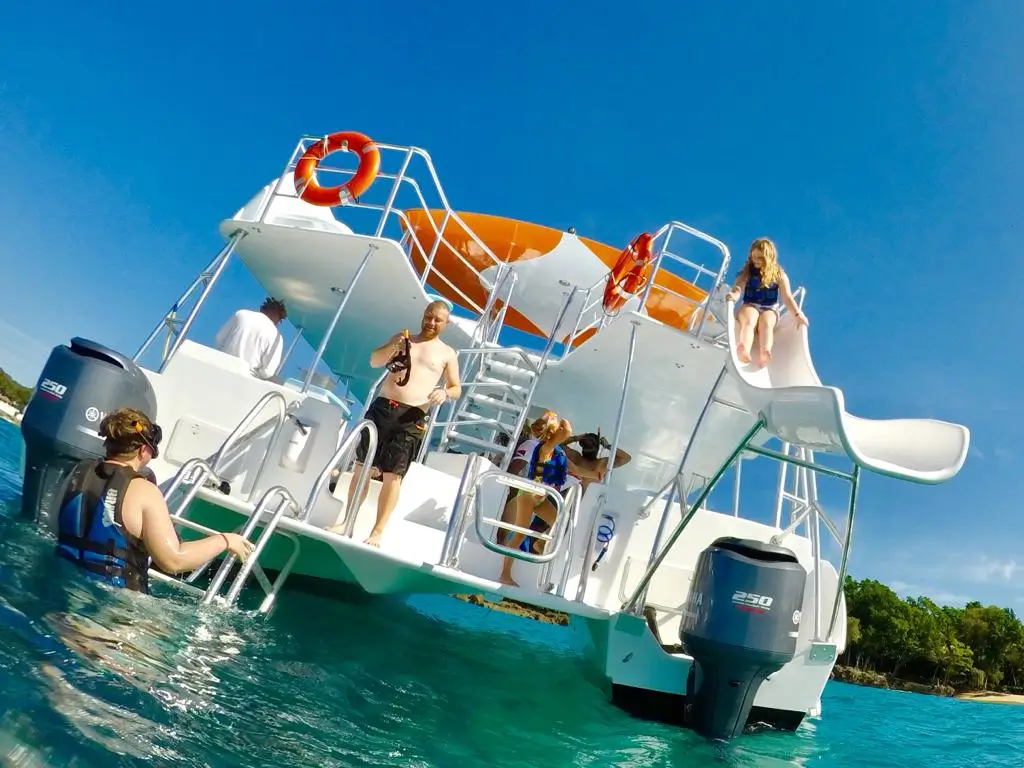
If you know you get seasick easily, ask about a shorter trip or a calmer time of year. Calmer coastal options, such as a catamaran and snorkeling cruise in Sosúa Bay, may suit some members of your group better.
What to bring on board
Most boats provide rods, tackle, bait and life jackets. Check whether drinks and snacks are included. Then pack:
- Sunscreen, a hat with a strap and polarized sunglasses
- A light long-sleeved shirt for sun protection
- Non-slip shoes with light-colored soles
- A windbreaker for the early run out
- Water, snacks and your seasickness remedy
- A dry bag for phone, wallet and documents
- Cash for the crew tip, which is customary when the crew has worked hard for you
Our guide on what to pack for excursions in the Dominican Republic covers dry bags and sun protection in more detail.
Booking your day
The deep sea fishing charter in Puerto Plata includes the boat, crew and gear. If you arrive by cruise ship, confirm the departure time and the return to port well before your all-aboard time; Adren Trip can help you check whether a charter fits your day in port.
Frequently asked questions
Do I need fishing experience to join a charter?
No. The crew sets up the gear, finds the spots and guides you through every step of the fight. Beginners and kids who are comfortable on boats regularly land their first fish on charters like this.
Can I keep the fish I catch?
It depends on the species, its size, local rules and the boat’s policy. Many crews encourage catch-and-release for big game fish. Ask before departure so you know what to expect.
What if the sea is too rough?
The captain decides whether it is safe to go out. If conditions are poor, the trip may be shortened or moved to another day. Ask about the rescheduling and cancellation policy when you book.
Keep reading
All articles
Adventure
Damajagua 27 Waterfalls: How the Climb, Jumps and Slides Really Work
A practical guide to the 27 Waterfalls of Damajagua: the uphill hike, the jumps and slides on the…

Adventure
Dune Buggy vs ATV vs Horseback in Puerto Plata: Which Ride to Pick
Three ways to explore the Puerto Plata countryside, compared honestly: how a buggy, a quad and a horse…

Islands & beaches
Cayo Arena (Paradise Island): A Sandbar Day from Puerto Plata
A tiny ring of white sand in open water, a speedboat through mangroves and some of the clearest…